2025
Within the Lines
Procedural · Motion
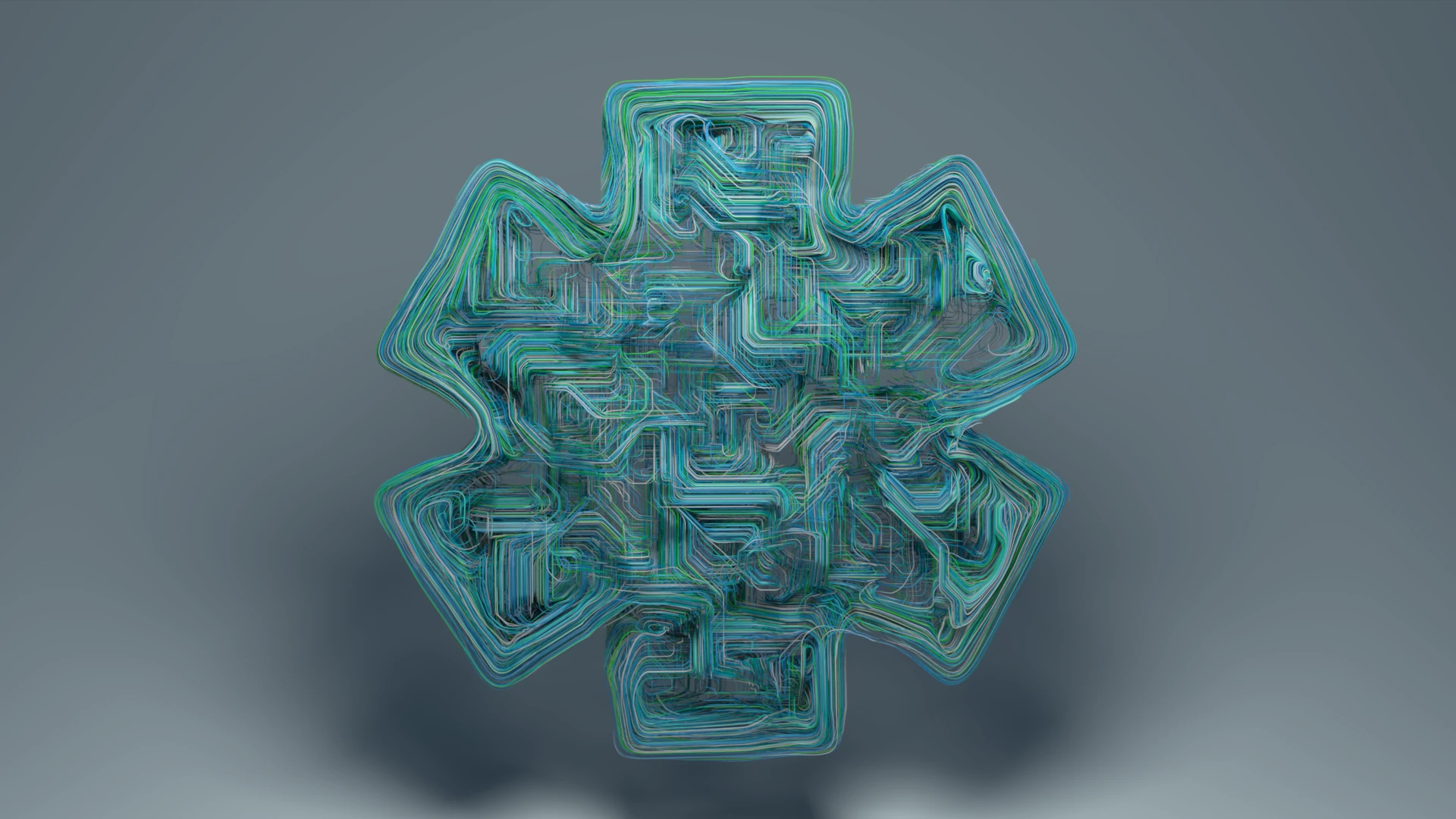
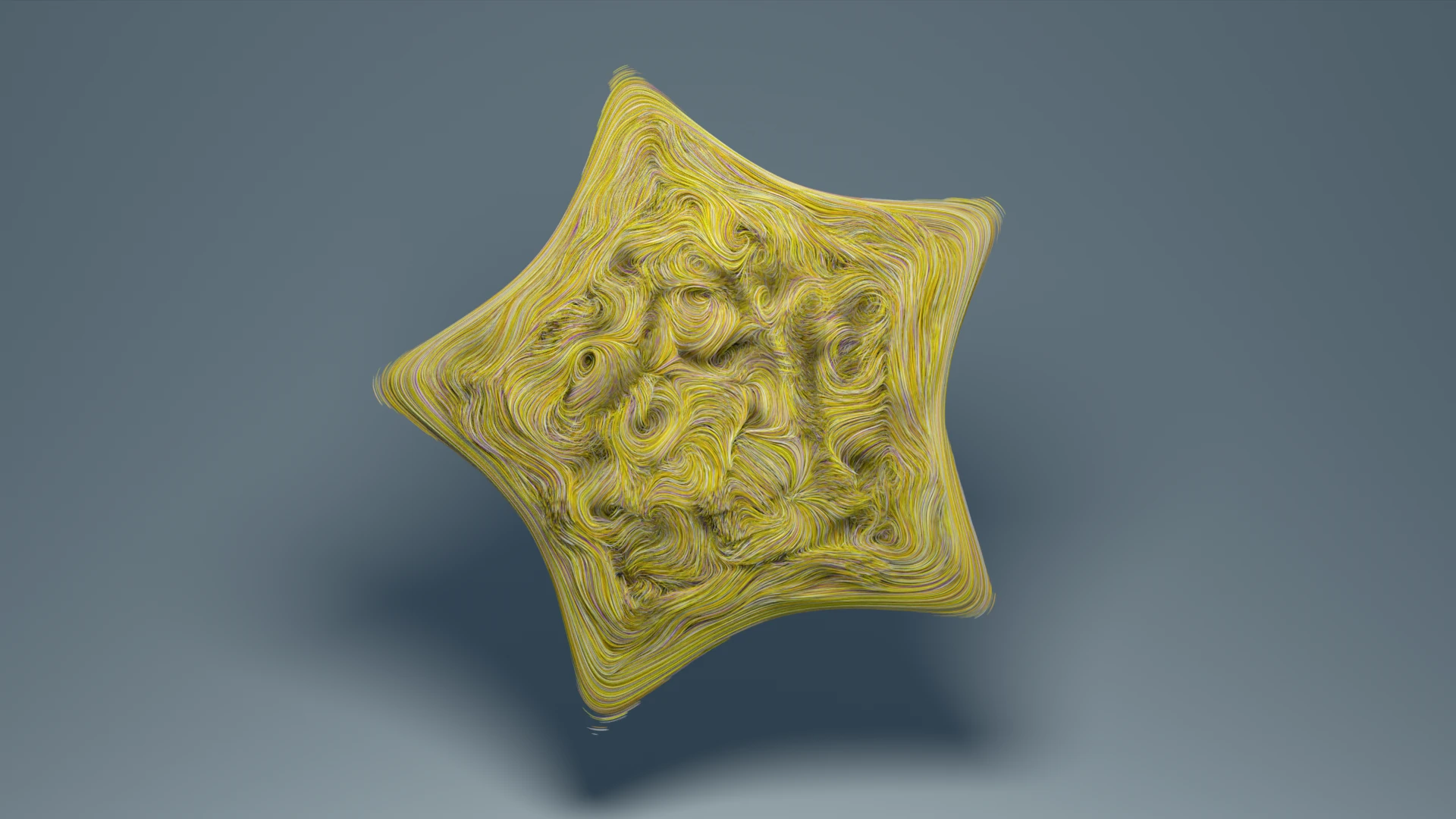
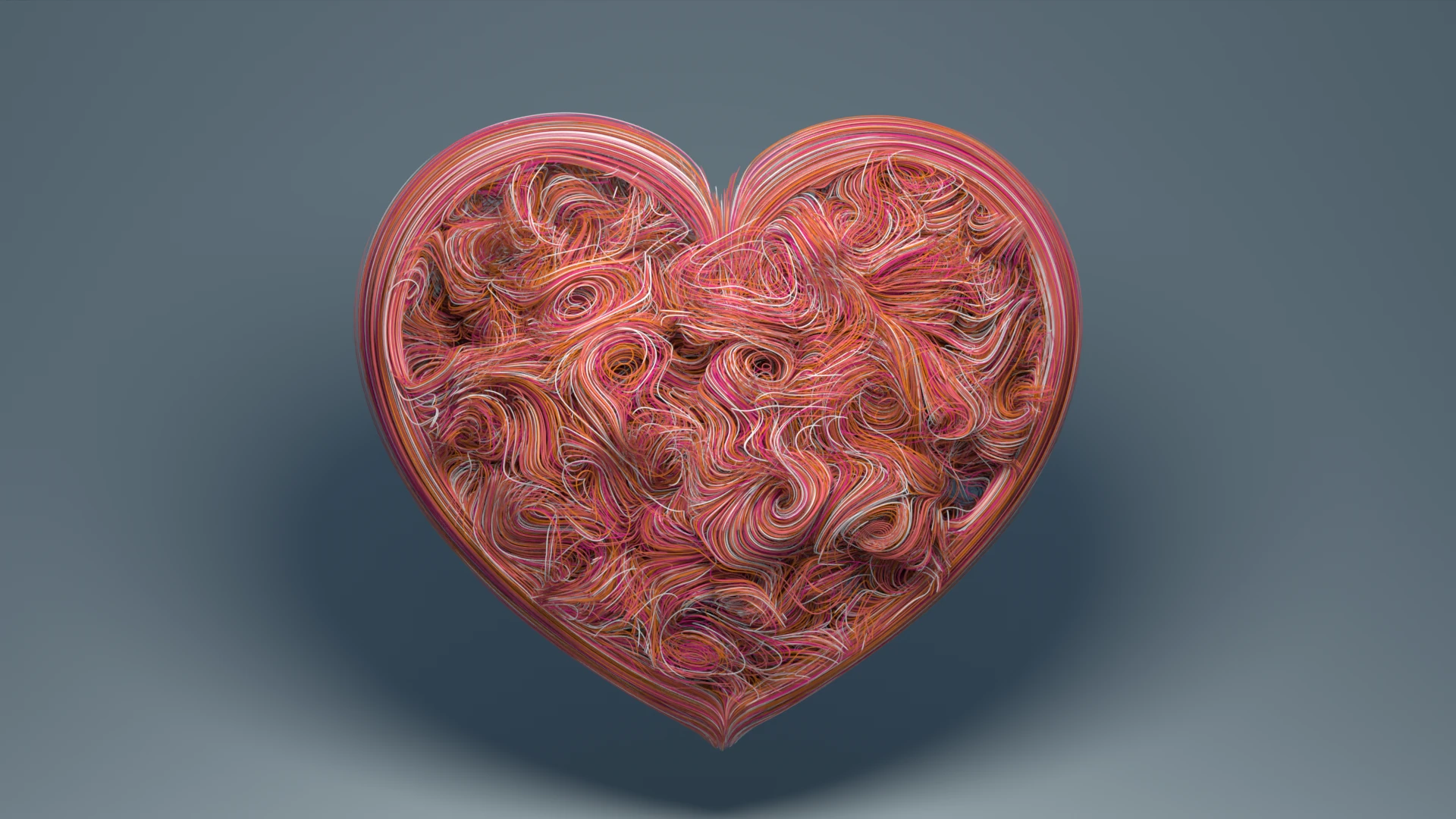
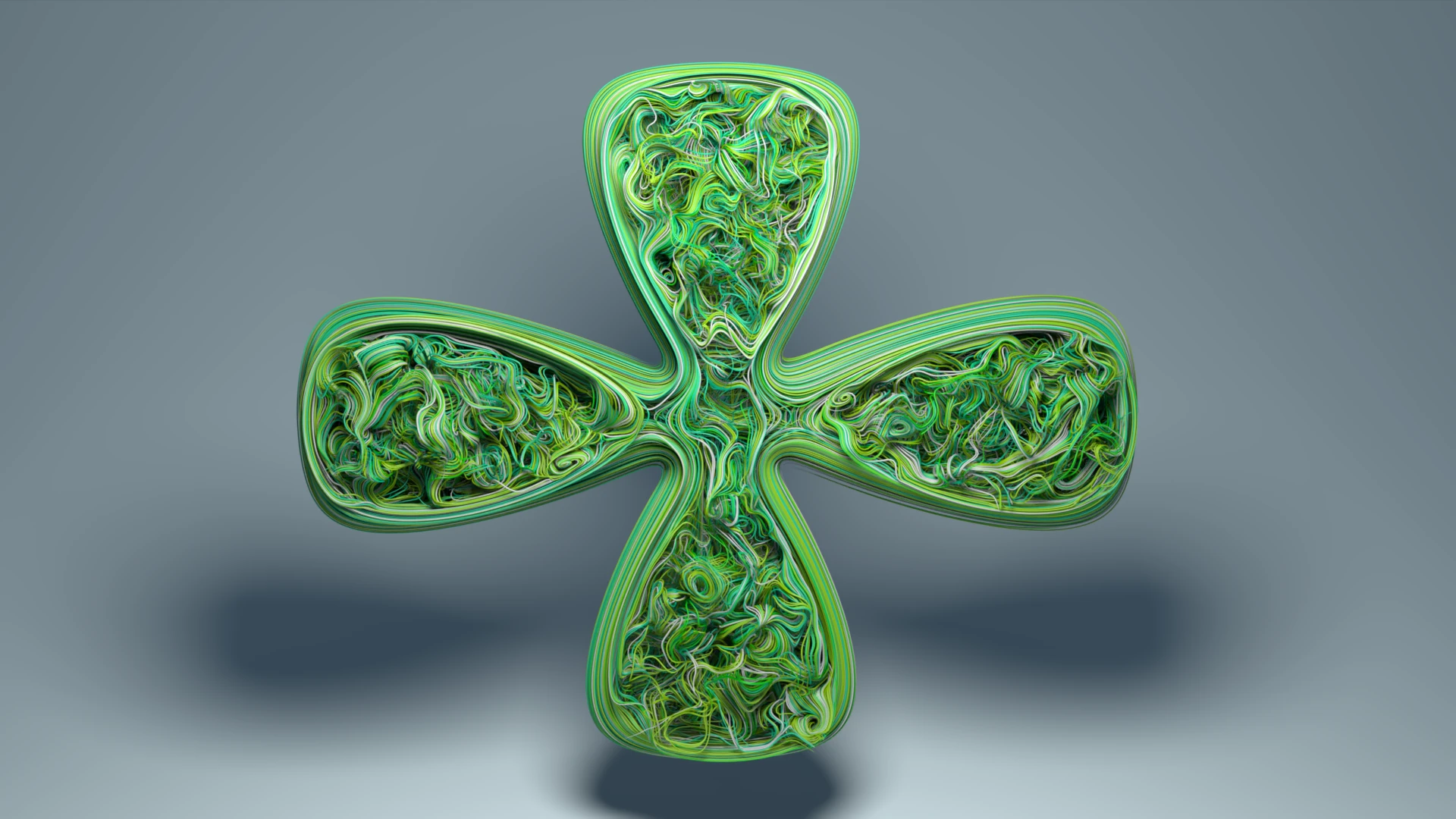
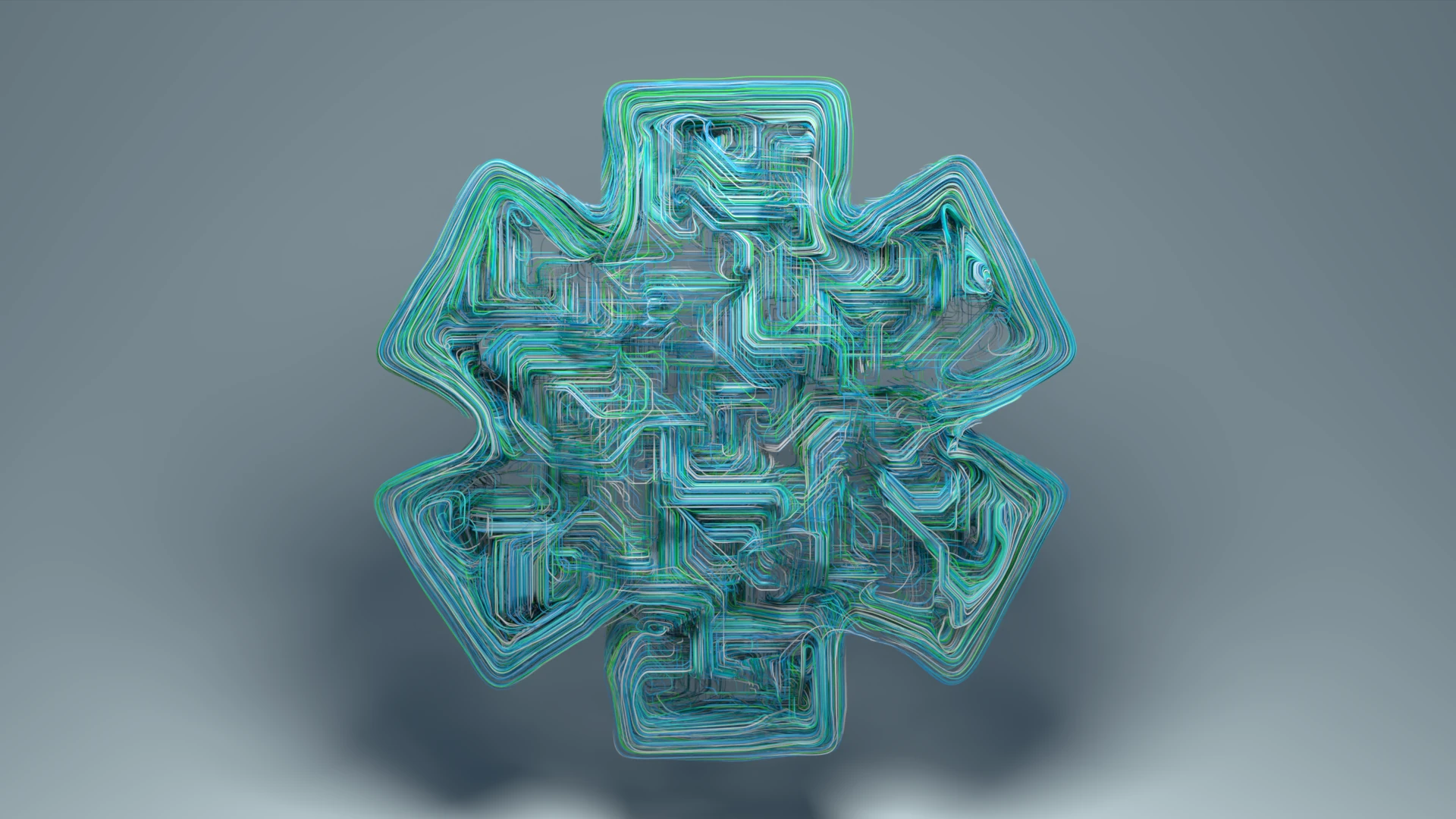
Within the Lines is a small series of procedural studies that compress restless motion into clean, iconic silhouettes. The works are primarily presented as short loops; the stills on this page are representative frames chosen to make structure, density, and boundary behavior easier to read.
Concept
Within the Line explores movement within a fixed boundary. Each piece keeps a stable outer contour while the curves inside loop, drift, cluster, and change direction, creating different densities and rhythms. Repeated lines build into forms that suggest flowing water, tangled roots, wiring, or loosely drawn marks. From a distance, the works read as simple graphic shapes; viewed closely, their interiors reveal layers of movement, accumulation, and erosion.
From Outline to Volume
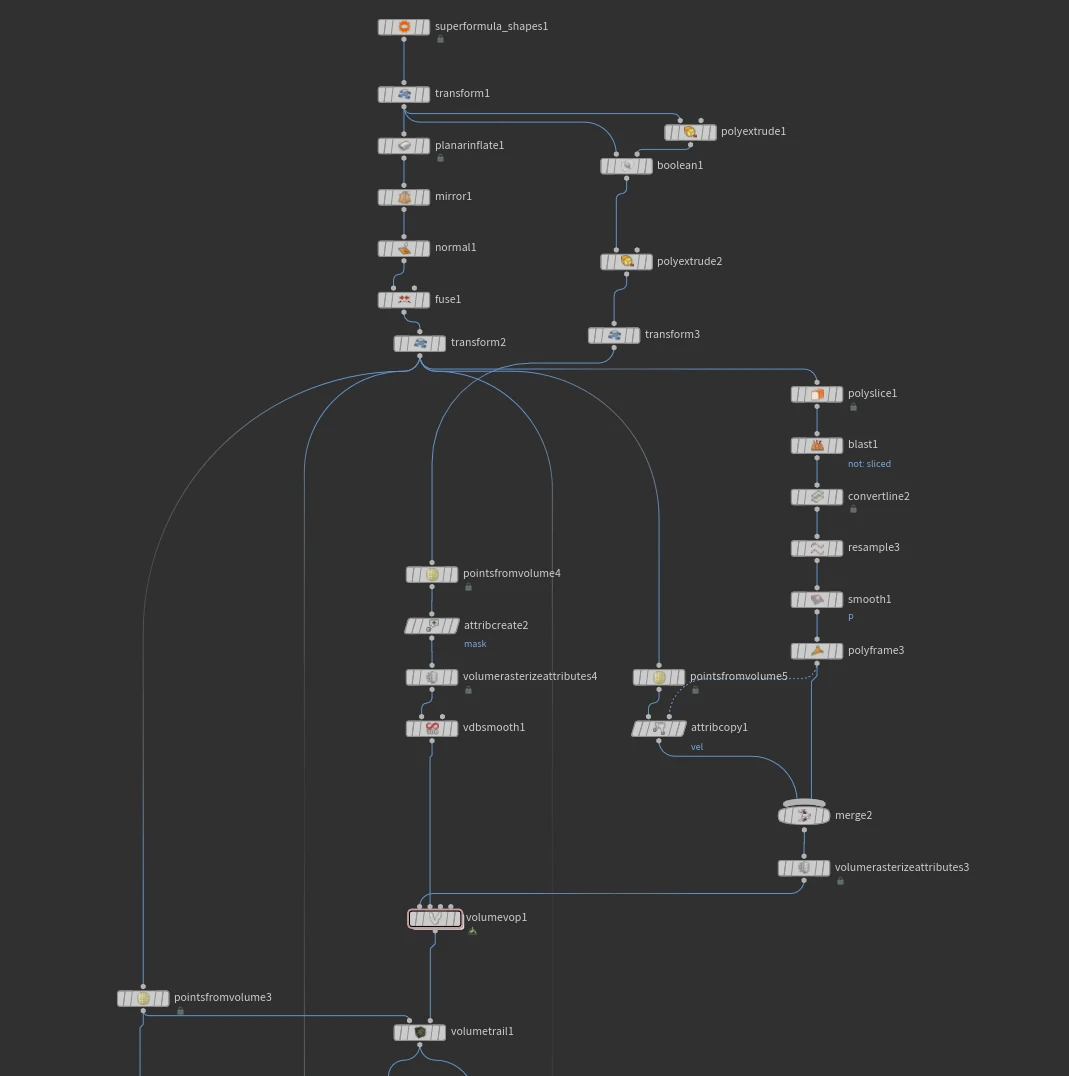
This sequence documents how a single outline is converted into a controllable spatial system. The pipeline begins with a clean silhouette and a set of geometric operations that define where structure is allowed to exist (slicing, contour bands, boolean gating). The interior is then resampled and converted into a volume representation, enabling attributes to be accumulated and propagated as a field rather than as static geometry. Once the volume carries the driving information, trajectories are generated by integrating through the field, producing a readable internal topology that remains anchored to the original boundary. The final stages focus on translating those trajectories into a coherent render—preserving the relationship between constraint (outline) and motion (field).
.webp)
.webp)
.webp)
.webp)
.webp)
.webp)
.webp)
.webp)
.webp)
.webp)
Generative Process
Each piece is built in Houdini using custom flow fields that guide thousands of curves within a fixed shape. By adjusting values such as attraction, noise, decay, and boundary resistance, the lines can gather, drift, or disperse in different ways. These small changes produce distinct visual rhythms and densities, while the overall silhouette remains the same.