
Dynamic Mosaic Surface
Fragmented Sculptural Reconstruction
Dynamic Mosaic Surface
Fragmented Sculptural Reconstruction
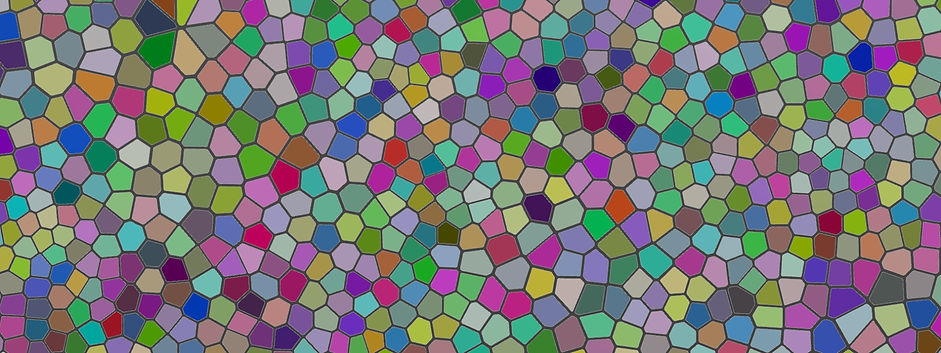
Dynamic Mosaic Surface is a procedural visual experiment exploring digital surfaces and fragmented reconstruction.
The project transforms continuous 3D surfaces into hundreds of irregular moving fragments that continuously reorganize across the form, creating a shifting state between material, structure, and digital skin.
Concept
Traditional 3D surfaces often emphasize:
-
stability
-
solidity
-
permanence
In this project, however, the surface becomes:
-
fragmented
-
fluid
-
continuously shifting
The fragments function somewhere between material and digital skin.
The system remains suspended between:
-
wholeness and fragmentation
-
stillness and motion
Surface and Structure
The fragments are not simply decorative elements attached to a model.
Instead, they function as a way of reorganizing the surface itself.
The project explores:
whether spatial continuity can still emerge when a surface is reconstructed through hundreds of fragmented elements.
As the fragments continuously move and reconnect, the overall structure remains unstable yet visually connected.
This relationship allows digital surfaces to behave more like materials capable of:
-
growth
-
fluidity
-
transformation

Procedural Generation
The project was developed through a procedural workflow.
Rather than manually placing each fragment, the structure is generated through rules and spatial relationships, producing different:
-
boundaries
-
densities
-
surface rhythms
with every iteration.
This unpredictability became an important part of the project.


Visual Language
Visually, the project draws inspiration from:
-
mosaics
-
stained glass
-
architectural skins
-
fractured materials
What interests me about these materials is their combination of:
-
ornament
-
fragility
-
structure
The fragmented surface therefore feels both decorative and structural at the same time.